
What a failure I felt like right then and there. It was as though I'd made it to the thesis portion of my Masters with almost all A+'s, and somehow didn't deserve it. It was as though all the scholarships I'd managed to get throughout my academic career weren't really meant to go to someone like me. I was no researcher - I was an impostor!Read the whole story!
Thursday, September 10, 2009
That Time I Felt Like an Impostor
From my blog:

“Anonymous was a woman”-unknown
This was a quote I found last year and wrote down just because it amused me at the time. Initially I thought it was referring to inventions and ideas from back when a woman’s place was in the home. But Barb and I were running a trivia game for the engineering frosh this week and one of our questions was about men and women being equally skilled in math except that girls had less confidence in their abilities. This got me thinking that a lot of times anonymous is still a woman because a lot of girls are still hesitant about their abilities and don’t step up and share their ideas. Girls still sit in class and try not to get noticed, maybe mutter the answer under their breath or scribble it on their page without raising their hand or shouting out the answer. I’ve even caught myself doing this and I’d say a have a fairly healthy self esteem.
CuWISE has always advertised as offering mentoring and support for current students, any time I hear this my gut reaction is to expect some upper year or grad student genius sitting at a desk with a scared first year or myself trying to get up the courage to ask for help with past experiences causing them to expect to be made to feel inferior. This is by no means always the case or even mostly the case with these types of programs. But I think it’s at least as important if not more so to have a support network including groups of people who don’t set out to be the teacher or mentor but are just there. The groups of students who you can relate to that have gone through and are still going through the same things you are.
I’ve always been shy and if I didn’t really know anyone in class I would go out of my way to have to ask a stranger for help because I always seemed to think that everyone else just got it, that no one else was struggling with material or time management or anything else. It was joining groups like WISE that made me realise that other students were struggling too. It’s the offhand remarks made after events when people are just hanging about that made me realise that I wasn’t alone in my struggles and that it is possible to get through them.
So my advice to all the first year students and everyone else too, is to get involved. Even if WISE is not the group for you, it is your involvement in those not for credit clubs and activities that will make your stay at university memorable and likely play a big role in helping you get through it as well.
Tuesday, September 8, 2009
I've always felt that I can't name enough famous women
I've always felt that I can't name enough famous women, so I researched them and here they are in the form of a "WISE" trivia game I made for EngFrosh:
 Who was the first woman ever to be awarded the Nobel Prize only 2 years after it was founded and 5 years later won another Nobel Prize? Clue: She discovered the elements Radium and Polonium. She was also the first woman to receive a doctorate in Europe. Answer: Marie Curie
 Who was the first woman to become United States Secretary of State. Clue: It was during Bill Clinton’s presidency. Answer: Madeleine Albright.
Was the first programmer recorded in history a man or a woman? Clue: Babbage was mentoring this person. Answer: It was a woman, Ada Lovelace
 What American biologist was awarded Nobel Prize in 2004 for her work on the genetics of smell, proving that each cell in our nose can only smell one scent? Answer: Linda Buck from USA
Who was one of the first programmers of the Harvard Mark I computer and developed the first compiler for a computer programming language. Clue: A conference, celebrating women in computing, is named after her. WISE executives are attending it for the second time this year. Answer: Grace Hopper
 Who is an Academy Award–nominated actress, television producer, literary critic and magazine publisher who is best known for her self-titled, multi-award winning talk show? Clue: Her talk show has become the highest-rated program of its kind in history. Answer: Oprah Winfrey
W ho was the world's first female aircraft designer and first woman to graduate from electrical engineering at U of T? Clue: She worked as an aeronautical engineer during the Second World War and did much to make Canada a powerhouse of airplane construction. Answer: Elsie MacGill
Wha t woman won the Nobel Prize in 2008 for discovering the HIV virus? Clue: She is a French virologist. Answer: Francoise Barre-Sinoussi
What wo man won the Nobel Prize in 2007 in literature. Clue: She grew up in Africa but was prohibited to enter the country because of her views on the equality of races. Answer: Doris Lessing
 Who won the Nobel Peace Prize in 1979 and India's highest civilian honour for her humanitarian work. Clue: Her Missionaries of Charity continued to expand and at the time of her death it was operating 610 missions in 123 countries. Answer: Mother Teresa
 Who is known as the mother of the atomic bomb by discovering nuclear fission? Clue: German version of Marie Curie. Answer: Lise Meitner
 Who was the first female senator to represent the US state and the first American First Lady to run for public office? Answer: Hillary Clinton
Wh o was the first African woman to get a Nobel Prize, which was in 2004? Clue: She founded the Green Belt Movement, an environmental non-governmental organization focused on the planting of trees, environmental conservation, and women's rights. Answer: Wangari Maathai
Whic h woman is best known for her contributions to the understanding of the fine molecular structures of DNA? Clue: She was an English biophysicist, physicist, chemist, biologist. Answer: Rosalind Franklin
 Who was the first woman ever to be awarded the Nobel Prize only 2 years after it was founded and 5 years later won another Nobel Prize? Clue: She discovered the elements Radium and Polonium. She was also the first woman to receive a doctorate in Europe. Answer: Marie Curie
 Who was the first woman to become United States Secretary of State. Clue: It was during Bill Clinton’s presidency. Answer: Madeleine Albright.
Was the first programmer recorded in history a man or a woman? Clue:
 Babbage was mentoring this person. Answer: It was a woman, Ada Lovelace
 What American biologist was awarded Nobel Prize in 2004 for her work on the genetics of smell, proving that each cell in our nose can only smell one scent? Answer: Linda Buck from USA
Who
 was one of the first programmers of the Harvard Mark I computer and developed the first compiler for a computer programming language. Clue: A conference, celebrating women in computing, is named after her. WISE executives are attending it for the second time this year. Answer: Grace Hopper
 Who is an Academy Award–nominated actress, television producer, literary critic and magazine publisher who is best known for her self-titled, multi-award winning talk show? Clue: Her talk show has become the highest-rated program of its kind in history. Answer: Oprah Winfrey
W
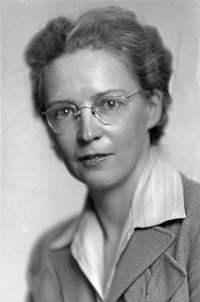 ho was the world's first female aircraft designer and first woman to graduate from electrical engineering at U of T? Clue: She worked as an aeronautical engineer during the Second World War and did much to make Canada a powerhouse of airplane construction. Answer: Elsie MacGill
Wha
t woman won the Nobel Prize in 2008 for discovering the HIV virus? Clue: She is a French virologist. Answer: Francoise Barre-SinoussiWhat wo
man won the Nobel Prize in 2007 in literature. Clue: She grew up in Africa but was prohibited to enter the country because of her views on the equality of races. Answer: Doris Lessing Who won the Nobel Peace Prize in 1979 and India's highest civilian honour for her humanitarian work. Clue: Her Missionaries of Charity continued to expand and at the time of her death it was operating 610 missions in 123 countries. Answer: Mother Teresa
 Who is known as the mother of the atomic bomb by discovering nuclear fission? Clue: German version of Marie Curie. Answer: Lise Meitner
 Who was the first female senator to represent the US state and the first American First Lady to run for public office? Answer: Hillary Clinton
Wh
 o was the first African woman to get a Nobel Prize, which was in 2004? Clue: She founded the Green Belt Movement, an environmental non-governmental organization focused on the planting of trees, environmental conservation, and women's rights. Answer: Wangari Maathai
Whic
 h woman is best known for her contributions to the understanding of the fine molecular structures of DNA? Clue: She was an English biophysicist, physicist, chemist, biologist. Answer: Rosalind Franklin
Some Career Tips for Joining the Start-Up Economy
Via ACM CareerNews Alert for Tuesday, February 17, 2009. In the spirit of Barb's post on the entrepreneurial spirit.
Some Career Tips for Joining the Start-Up Economy
Media Post, August 13
While job growth within the broader economy may be stalling, the good news is that we are starting to see a lot of “green-shoot” growth at small companies, especially nimble, fast-moving start-ups. Thus, for IT workers looking for jobs or thinking about career changes, particularly for those in any industry that generally lags the overall economy, the start-up sector is becoming increasingly attractive. With that in mind, the article shares some career tips for those who are considering joining start-up companies.
Success with a new start-up takes much more than desire to work in an exciting and innovative environment. People think that great relationships and a thick Rolodex are keys to success in transitioning from big companies to small, particularly if you are in sales or business development. It's not that simple. When you work for a big company, everybody wants to work with you. When you move to a small firm, the value that you provide is measured by the actual results that you can deliver for customers and partners. This requires really understanding your customers, their needs and your product and obsessing over customer service. You have to ask yourself every day how much real value you created that day, and make yourself essential.
Click Here to View Full Article
Sunday, September 6, 2009
Women outnumber men in Canadian workforce
For the first time in history there are more women than men in Canada's workforce. A recently issued labour force survey found that about 7.1 million women were in paid employment during the first half of 2009, compared to 6.9 million men.That means that about 50.7% of the Canadian workforce is female! Read more on CTV.ca here. The article also mentions that women are still paid less than men, about 71 cents on the dollar.
Friday, September 4, 2009
I have all these entrepreneurial ideas, where do I start?
Just today I spoke to a friend of mine about a business idea she has. Listening to the passion in her vision made my heart race. I love it when women have great ideas and even better when they know exactly what they want to do with their ideas. Not everyone gets to that point at age 26 like my friend here. So the wheels in my head started turning and all sorts of resources came to mind (thanks to networking through WISE). I thought about it, searched the internet a little bit, and I realized that there is a lot of help available out there. Here is my advice to all of you entrepreneurs at heart:
 Begin by making sure that your online presence is superb. Networking online is huge. Start with updating your profile on LinkedIn. Find people to connect with and ask people to write you recommendations. Join relevant groups, like the "Ottawa Talent Initiative Alumni and Friends","On Startups - The Community For Entrepreneurs", "Women for Hire", "She Geared", as well as all the groups I listed below. And don't forget to join the below organizations' mailing lists and contact them too.
 Ontario Centres of Excellence (OCE) focuses on "stimulating knowledge transfer through the development of bright minds, moving their skills to the market". They provide workshops to help you get your business ideas together. It's focused on research and development in science and technology, but their workshops would help anyone for any business. And best of all the people who teach these workshops (ex. marketing) have a passion for helping young people do what they love in a business setting. I met a few of them and I've seen it.
 The Ottawa Centre for Research and Innovation (OCRI) is "Ottawa's lead economic development corporation bringing business, education and research together to help local technology companies thrive locally and compete globally". They hold lots of events that may help you network and gain knowledge. I know that a while back OCRI and OCE (as well as INSA) organized a keynote presentation by Apple Computer Inc. co-founder Steve Wozniak. Unfortunately it cost $60 for members and $80 for non-members, including lunch. I do wish they would have made Steve a little more accessible while he was in town. Oh and look into OCRI's e2 Entrepreneur's Edge Program as well.
 Women 2.0 is "committed to increasing the number of women entrepreneurs starting high growth ventures by providing the resources, network, and knowledge for the launch and growth of their company". Their vision is "to be a catalyst for change, mobilizing a global community of ambitious women entrepreneurs seeking to advance the world through technology". Women 2.0 is headquartered in San Francisco. For example, they have contests for best business proposals and help the winner start her business economically and socially. You can find them on LinkedIn, Facebook, etc..
This should get you on the right track. Just follow your gut and your heart. And drop me a line if this helped! It will make me feel warm and fuzzy inside.
Good luck to you all!
 Begin by making sure that your online presence is superb. Networking online is huge. Start with updating your profile on LinkedIn. Find people to connect with and ask people to write you recommendations. Join relevant groups, like the "Ottawa Talent Initiative Alumni and Friends","On Startups - The Community For Entrepreneurs", "Women for Hire", "She Geared", as well as all the groups I listed below. And don't forget to join the below organizations' mailing lists and contact them too.Ontario Centres of Excellence (OCE) focuses on "stimulating knowledge transfer through the development of bright minds, moving their skills to the market". They provide workshops to help you get your business ideas together. It's focused on research and development in science and technology, but their workshops would help anyone for any business. And best of all the people who teach these workshops (ex. marketing) have a passion for helping young people do what they love in a business setting. I met a few of them and I've seen it.
 The Ottawa Centre for Research and Innovation (OCRI) is "Ottawa's lead economic development corporation bringing business, education and research together to help local technology companies thrive locally and compete globally". They hold lots of events that may help you network and gain knowledge. I know that a while back OCRI and OCE (as well as INSA) organized a keynote presentation by Apple Computer Inc. co-founder Steve Wozniak. Unfortunately it cost $60 for members and $80 for non-members, including lunch. I do wish they would have made Steve a little more accessible while he was in town. Oh and look into OCRI's e2 Entrepreneur's Edge Program as well.
 Women 2.0 is "committed to increasing the number of women entrepreneurs starting high growth ventures by providing the resources, network, and knowledge for the launch and growth of their company". Their vision is "to be a catalyst for change, mobilizing a global community of ambitious women entrepreneurs seeking to advance the world through technology". Women 2.0 is headquartered in San Francisco. For example, they have contests for best business proposals and help the winner start her business economically and socially. You can find them on LinkedIn, Facebook, etc..
This should get you on the right track. Just follow your gut and your heart. And drop me a line if this helped! It will make me feel warm and fuzzy inside.
Good luck to you all!
Tuesday, September 1, 2009
The Imposter WISE women (Part 2 of 2)
In a previous post, I listed some of the symptoms of the imposter syndrome discussed at the “Imposter Panel" in the Grace Hopper Conference 2008.
If you have ever felt like an imposter and you are wondering if there is a cure for it, here’s how the panellists deal with it:
If you have ever felt like an imposter and you are wondering if there is a cure for it, here’s how the panellists deal with it:
- There is no cure! It never stops (always new responsibilities). Treat the symptoms.
- Believe in yourself and surround yourself with others that believe in you.
- Value the things you’re good at, remember your previous successes. Think about where you were (5-10) years ago.
- Accept self-doubt as part of who you are. Remember how many other people that you believe successful people have doubted themselves.
- Take risks (calculated) ... you’ll stand out.
- You’re not the only one,
- there’s no cure, but
- you can treat the symptoms and
- you’ll eventually feel less imposter with time and practice.
Subscribe to:
Posts (Atom)

 Posts

